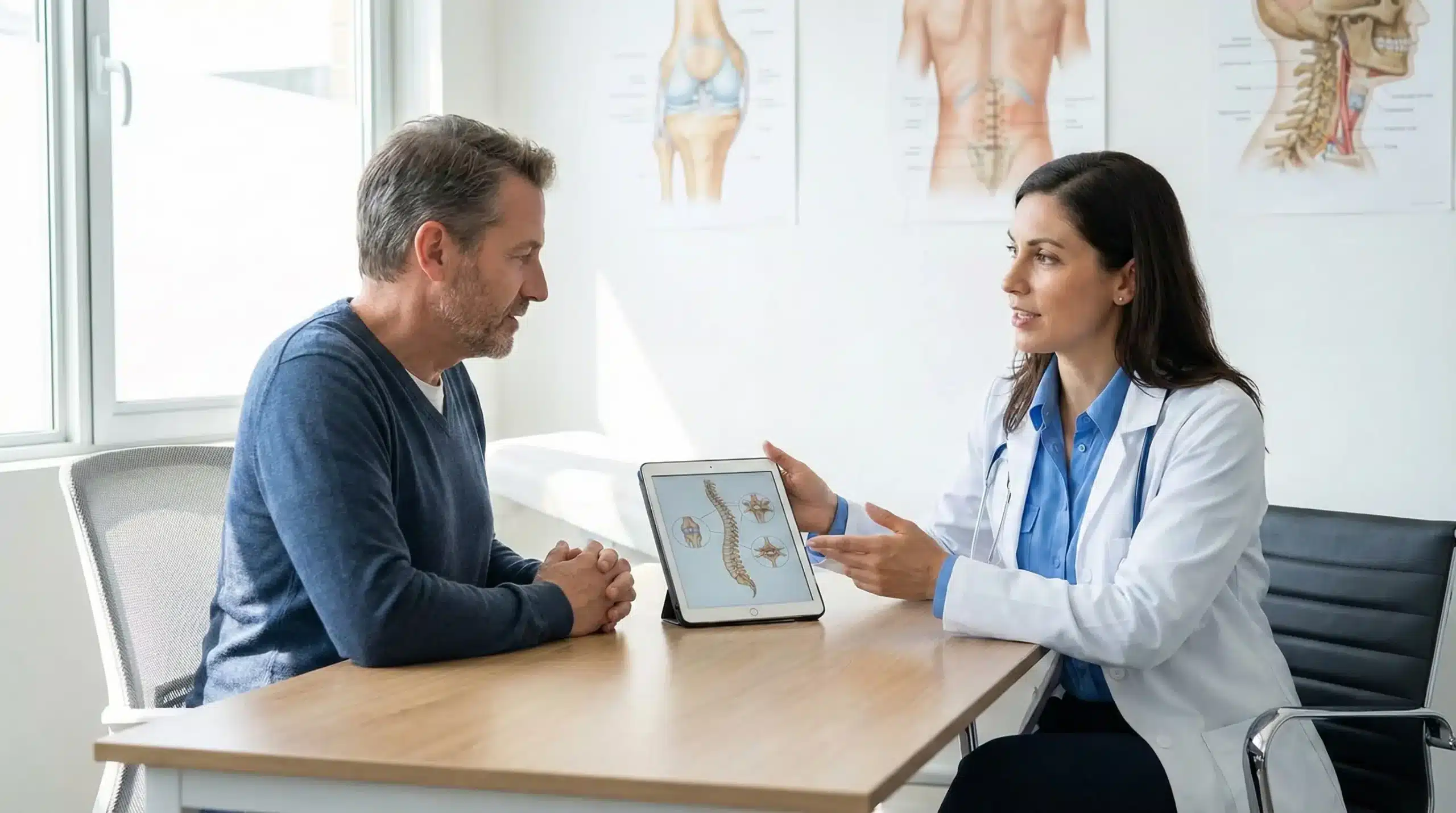

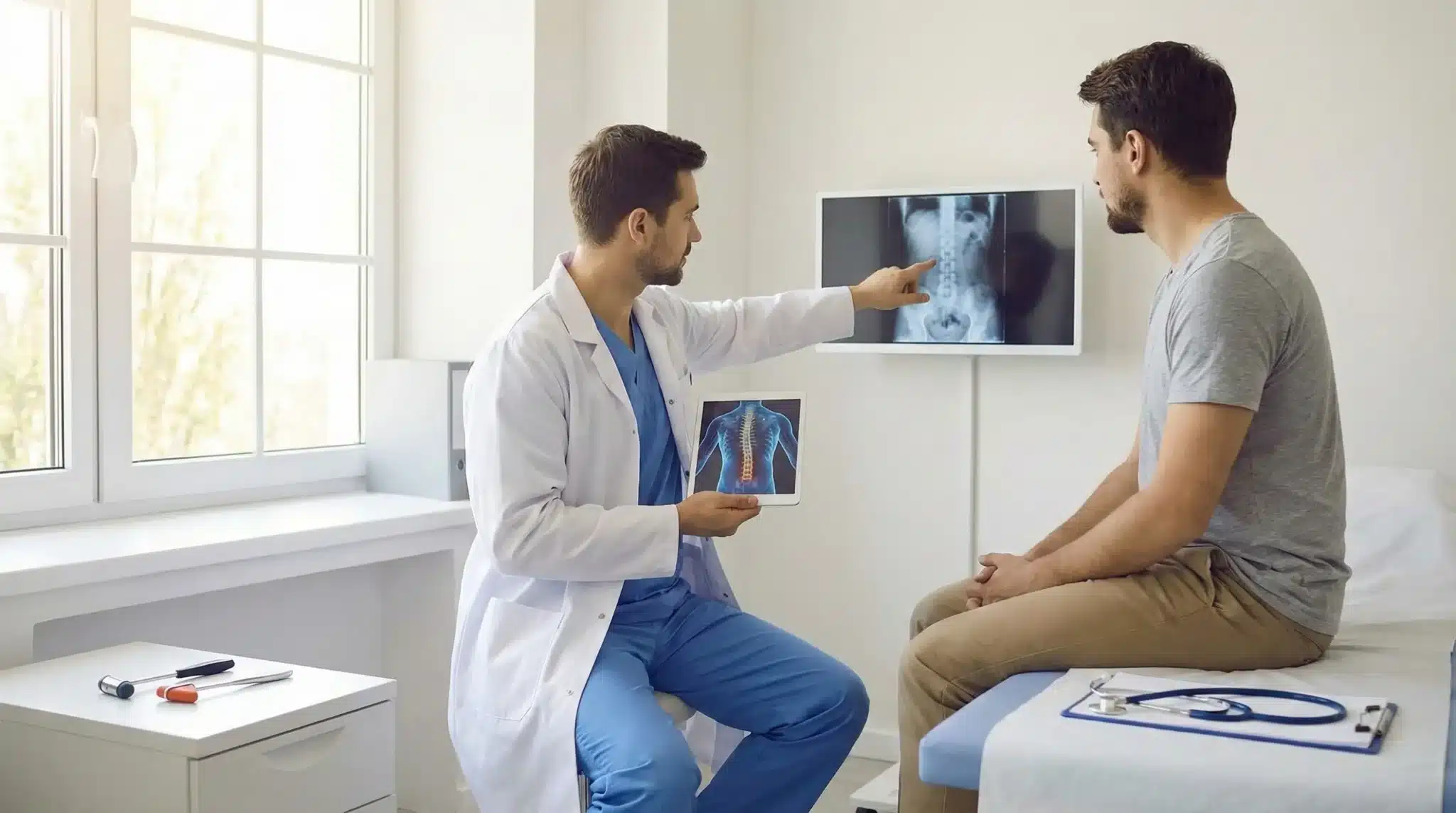
Pain can be frustrating, confusing, and sometimes overwhelming, especially when it lingers without a clear explanation. You might know where it hurts, but understanding why it hurts is a different challenge altogether. This is where a Pain Management Physician plays a critical role. Diagnosing pain isn’t about guessing or relying on a single test. It’s a careful, step-by-step process designed to uncover the trustworthy source of discomfort so it can be addressed appropriately.
Pain management focuses on the whole person, not just one symptom. Clinics such as the Spine and Pain Clinic of Texas emphasize comprehensive evaluation to understand the underlying causes of pain rather than simply treating what’s felt on the surface.
Understanding the Complexity of Pain
Pain is not a simple signal that something is wrong. It’s a complex interaction between the body and the nervous system.
Why Pain Is Not Always Straightforward
Pain can originate in one area but be felt elsewhere. It can persist long after tissue has healed, or fluctuate without a clear pattern. These complexities make specialized evaluation essential when pain becomes ongoing.
The Role of a Pain Management Physician
A Pain Management Physician is trained to evaluate pain from multiple angles.
Specialized Training and Perspective
This specialty focuses on how nerves, muscles, joints, and the spine interact. That broad perspective allows a Pain Management Physician to recognize patterns that may not be obvious during a routine medical visit.
The Importance of Listening to the Patient
Diagnosis often begins with conversation.
Pain History and Symptom Patterns
Patients are asked detailed questions about when pain began, how it feels, where it travels, and how it changes throughout the day.
Duration, Triggers, and Intensity
Understanding how long pain has lasted, what triggers flare-ups, and how intense symptoms become helps narrow down potential causes.
Reviewing Medical and Lifestyle Factors
Pain rarely exists in isolation.
Past Injuries, Conditions, and Treatments
Previous injuries, surgeries, medical conditions, and prior treatments provide essential clues about why pain persists or returns.
Physical Examination and Movement Assessment
The physical exam helps connect symptoms to their functional effects.
Identifying Functional Limitations
A Pain Management Physician evaluates posture, range of motion, strength, and how pain responds to specific movements or positions.
Understanding Referred and Radiating Pain
Not all pain is felt at its source. Recognizing referred or radiating pain patterns helps identify whether pain originates from nerves, joints, or deeper structures.
Diagnostic Imaging in Pain Evaluation
Imaging is often part of the diagnostic process, but it’s only one piece of the puzzle.
MRI, CT, and X-Ray Findings
These tools help visualize bones, discs, joints, and soft tissues that may contribute to pain.
Why Imaging Alone Is Not Enough
Many people have abnormal imaging results without pain, while others experience significant pain with minimal findings. Context and clinical evaluation are essential for accurate diagnosis.
Diagnostic Injections and Response-Based Clues
In some cases, targeted injections help confirm pain sources by observing how symptoms respond to treatment of specific structures.
Evaluating Nerve-Related Pain
Nerve pain behaves differently from muscle or joint pain.
Sensory Changes and Neurological Testing
Symptoms such as tingling, burning, or weakness help a Pain Management Physician identify nerve involvement.
Identifying Inflammatory Pain Sources
Inflammation can sensitize nerves and tissues, making pain more persistent and widespread than expected.
Connecting the Dots Between Multiple Pain Sources
Many patients have more than one contributing pain source. Effective diagnosis involves understanding how these factors overlap and influence one another.
Developing a Clear Diagnosis
By combining patient history, physical examination, imaging results, and response patterns, a Pain Management Physician builds a comprehensive understanding of the origin of the pain.
How Experience Improves Diagnostic Accuracy
Experience allows physicians to recognize subtle signs and avoid assumptions, leading to more precise diagnoses.
How Clinics Like Spine and Pain Clinic Of Texas Approach Diagnosis
Clinics such as the Spine and Pain Clinic of Texas emphasize thorough, methodical evaluation, recognizing that accurate diagnosis is the foundation of effective pain care.
Final Thoughts on Accurate Pain Diagnosis
Pain rarely has a single, apparent cause. A Pain Management Physician Plano looks beyond surface symptoms to understand the deeper mechanisms driving discomfort. Through careful listening, detailed examination, and thoughtful analysis, the root cause of pain becomes clearer—opening the door to more informed and effective care.
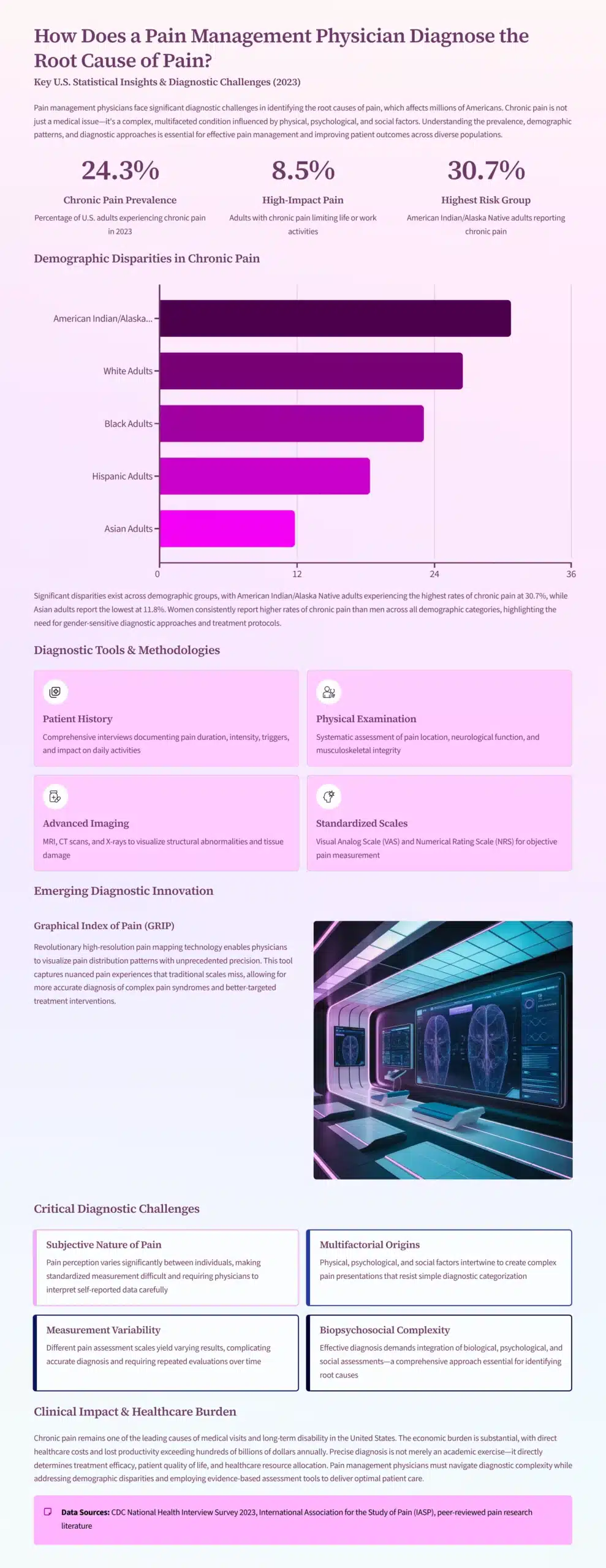
How Does a Pain Management Physician Diagnose the Root Cause of Pain?
Key U.S. Statistical Insights & Diagnostic Challenges (2023)
Prevalence of Chronic Pain:
24.3% of U.S. adults experienced chronic pain in 2023
8.5% had high-impact chronic pain limiting life or work activities
Demographic Disparities:
American Indian/Alaska Native adults report the highest chronic pain (30.7%)
Asian adults report the lowest (11.8%)
Women have higher rates than men
Diagnostic Complexity:
Pain is subjective and multifactorial: physical, psychological, and social factors
Physicians use detailed patient history, physical exams, imaging, and standardized pain scales (e.g., Visual Analog Scale, Numerical Rating Scale)
Emerging tools like the Graphical Index of Pain (GRIP) enable high-resolution pain mapping
Challenges in Diagnosis:
Variability in pain reporting and measurement scales complicates root cause identification
Repeated assessments and biopsychosocial evaluation are essential for accurate diagnosis
Impact:
Chronic pain is a leading cause of medical visits and disability, requiring a precise diagnosis to guide effective management.
Data sources: CDC National Health Interview Survey 2023, IASP, peer-reviewed pain research
Spine and Pain Clinic Of Texas Serving the Hebron Community and Beyond in Hebron
Spine and Pain Clinic of Texas is dedicated to serving the diverse needs of the local community of Hebron, including those in neighborhoods such as Hebron. With its convenient location near landmarks such as Austin Waters Community Pool and Arbor Hills Nature Preserve, and major intersections like Silver Oak Dr and Windhaven Pkwy (coordinates: Latitude: 33.058259, Longitude: -96.842936), we offer Pain Management Physician services.
Get Pain Management Physician Services at Hebron Now
Call Us or Contact Us (146) 991- 55222
Navigate from Hebron to Spine and Pain Clinic Of Texas Now
Frequently Asked Questions
- Why does pain sometimes continue after an injury has healed?
The nervous system can remain sensitized, causing pain to persist even after tissues recover. - Can pain exist without visible damage on imaging tests?
Yes. Pain can occur due to nerve sensitivity or functional issues not visible on scans. - How important is patient history in diagnosing pain?
It’s critical. Pain patterns and history often provide the most valuable diagnostic clues. - Can pain have more than one cause at the same time?
Absolutely. Many pain conditions involve multiple overlapping sources. - 5. Why is specialized pain diagnosis important?
- Accurate diagnosis helps focus care on the trustworthy source of pain rather than temporary symptom relief.