
Pain has a way of affecting every part of life. It can change how you move, how you sleep, and even how you think. While many people associate pain care with difficult or last-resort situations, the reality is that a Pain Management Physician treats a wide range of conditions that involve ongoing or complex pain. Understanding which conditions fall under pain management helps clarify when specialized evaluation is essential.
Pain management focuses on identifying why pain persists and how it affects the body as a whole. Clinics such as the Spine and Pain Clinic of Texas approach pain with a comprehensive perspective, recognizing that pain rarely exists in isolation.
Understanding the Scope of Pain Management
Pain management covers far more than just one type of discomfort or injury.
Why Pain Often Requires Specialized Care
Pain can persist even after tissues heal, appear without apparent injury, or worsen over time. These patterns often involve the nervous system, making specialized evaluation essential.
The Role of a Pain Management Physician
A Pain Management Physician is trained to diagnose and manage pain that doesn’t respond to basic care.
A Whole-Body Approach to Pain
Rather than focusing on one symptom, pain management evaluates how nerves, muscles, joints, and movement patterns interact to produce pain.
Acute Pain vs Chronic Pain
The duration of pain matters.
How Duration Changes Treatment Needs
Acute pain usually improves within weeks. Chronic pain lasts months or longer and often requires a different, more detailed approach.
For More Information, visit What Doctor Should I See for Back Pain That Doesn’t Improve After Rest?
Back and Neck Pain Conditions
Back and neck pain are among the most commonly treated conditions.
Degenerative Spine Conditions
Age-related changes in the spine can contribute to persistent discomfort.
Disc, Joint, and Alignment Issues
Problems involving spinal discs, facet joints, or alignment can cause localized pain or radiating symptoms.
Nerve-Related Pain Conditions
Nerve pain feels different from other types of pain.
Neuropathic and Radicular Pain
Burning, tingling, shooting, or electric-like sensations often indicate nerve involvement affecting the arms or legs.
Joint and Musculoskeletal Pain
Pain management physicians frequently address pain involving joints and surrounding tissues.
Shoulder, Hip, and Knee Pain
Wear and tear, overuse, and biomechanical stress can lead to ongoing joint pain that limits movement.
Arthritis-Related Pain
Arthritis is a common cause of chronic pain.
Osteoarthritis and Inflammatory Arthritis
Both degenerative and inflammatory arthritis can cause stiffness, swelling, and long-term discomfort.
Headache and Facial Pain Disorders
Some pain conditions affect the head and face rather than the spine or joints.
Chronic Headaches and Neuralgia
Certain headache disorders and facial nerve pain fall within the scope of pain management care.
Pain Following Injury or Trauma
Injuries don’t always heal as expected.
Lingering Pain After Healing
Pain can persist even after tissues recover, often due to nerve sensitivity or altered movement patterns.
Post-Surgical Pain Conditions
Surgery does not always eliminate pain.
When Pain Persists After Surgery
Ongoing pain after surgery may require specialized evaluation to identify contributing factors.
Complex Regional and Widespread Pain
Some pain conditions affect large areas of the body.
Central Sensitization
In these cases, the nervous system becomes overly responsive, amplifying pain signals beyond the original injury.
Cancer-Related Pain
Pain management physicians also help manage pain related to cancer and cancer treatments, focusing on comfort and quality of life.
Why Pain Conditions Often Overlap
Many people experience more than one pain condition at the same time. Joint issues, nerve irritation, and inflammation frequently coexist, making a comprehensive assessment essential.
How Clinics Like Spine and Pain Clinic Of Texas Address These Conditions
Clinics such as the Spine and Pain Clinic of Texas emphasize careful evaluation to understand how multiple pain sources interact, recognizing that accurate identification is key to effective care.
Final Thoughts on the Breadth of Pain Management Care
A Pain Management Physician Plano treats far more than isolated aches. From spine and nerve pain to joint pain, post-injury pain, and widespread pain conditions, this specialty addresses the full spectrum of pain experiences. Understanding the variety of conditions involved highlights why pain management plays such an essential role in long-term health and quality of life.
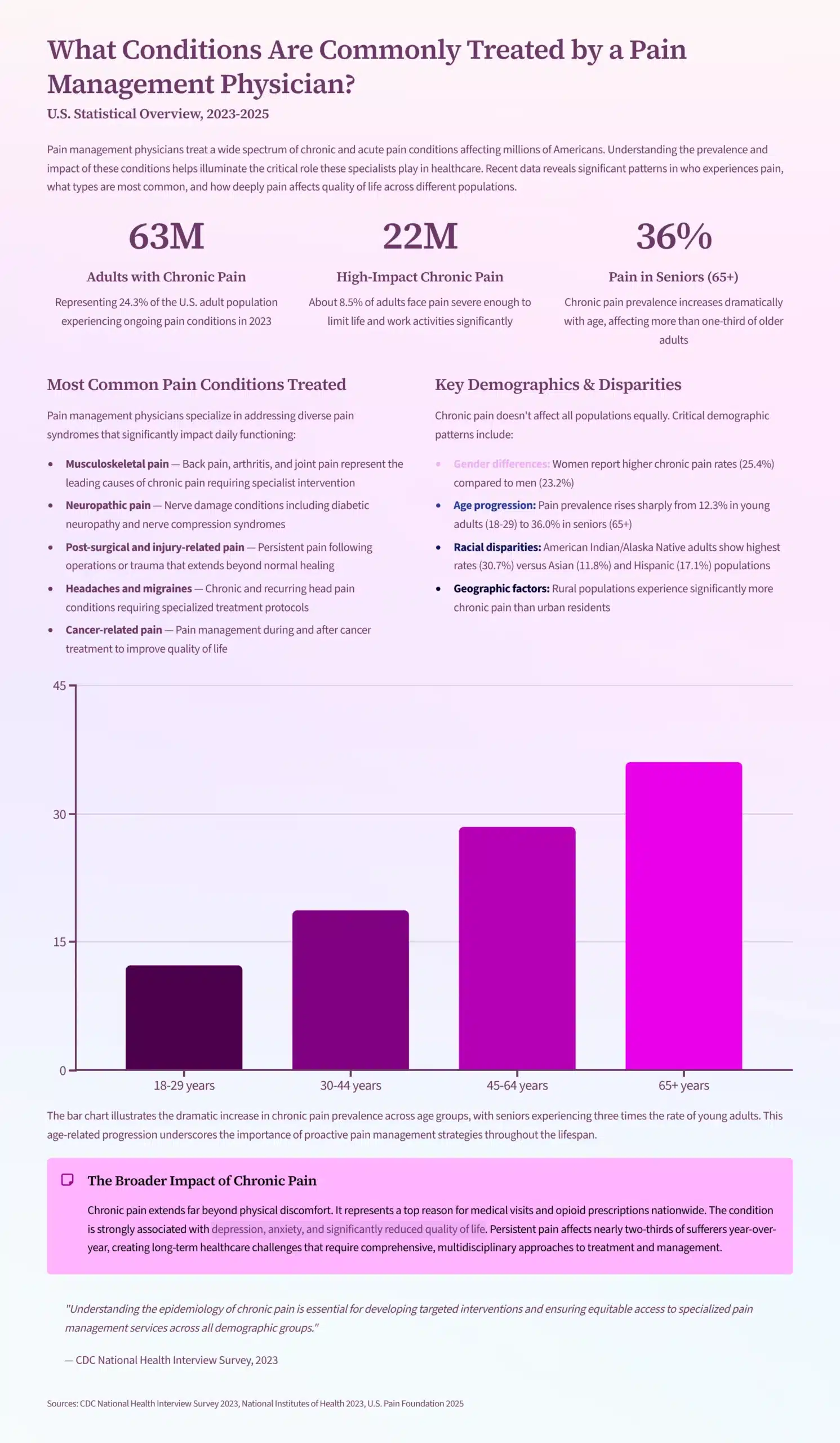
What Conditions Are Commonly Treated by a Pain Management Physician?
U.S. Statistical Overview, 2023-2025
Chronic Pain Prevalence:
24.3% of U.S. adults (approx. 63 million) experienced chronic pain in 2023
8.5% (about 22 million) had high-impact chronic pain limiting life/work activities
Common Pain Conditions Treated:
Musculoskeletal pain (back pain, arthritis, joint pain) — leading cause of chronic pain
Neuropathic pain (nerve damage, diabetic neuropathy)
Post-surgical and injury-related pain
Headaches and migraines
Cancer-related pain
Demographic Insights:
Women report higher rates of chronic pain (25.4%) than men (23.2%)
Pain prevalence increases with age: 12.3% (ages 18-29) → 36.0% (65+)
Higher rates among American Indian/Alaska Native adults (30.7%) vs. Asian (11.8%) and Hispanic (17.1%) adults
Rural populations experience more chronic pain than urban populations
Impact & Challenges:
Chronic pain is a top reason for medical visits and opioid prescriptions
Associated with depression, anxiety, and reduced quality of life
Persistent pain affects nearly two-thirds of sufferers year-over-year
Sources: CDC National Health Interview Survey 2023, NIH 2023, U.S. Pain Foundation 2025 [Visual suggestion: Bar chart showing chronic pain prevalence by age group and sex; pie chart of pain condition types treated by pain specialists]
Spine and Pain Clinic Of Texas Serving the Richardson Community and Beyond in Richardson
Spine and Pain Clinic of Texas is dedicated to serving the diverse needs of the local community in Richardson, including individuals residing in neighborhoods such as Richardson. With its convenient location near landmarks such as The University of Texas at Dallas and major intersections like Frankford Rd and Coit Rd (coordinates: Latitude: 33.000435, Longitude: -96.773943), we offer Pain Management Physician services.
Get Pain Management Physician Services at Richardson Now
Call Us or Contact Us (146) 991- 55222
Navigate from Richardson to Spine and Pain Clinic Of Texas Now
Frequently Asked Questions
- Do pain management physicians only treat chronic pain?
No. They evaluate both acute and chronic pain, especially when pain is complex or persistent. - Is nerve pain different from muscle pain?
Yes. Nerve pain has unique characteristics and requires specialized evaluation. - Can pain affect more than one area at the same time?
Yes. Overlapping pain conditions are prevalent. - Is pain always linked to visible injury or damage?
No. Pain can occur due to changes in the nervous system or inflammation, without apparent structural damage. - 5. Why is pain management considered a medical specialty?
- Pain involves complex interactions between body systems that require focused training and experience.