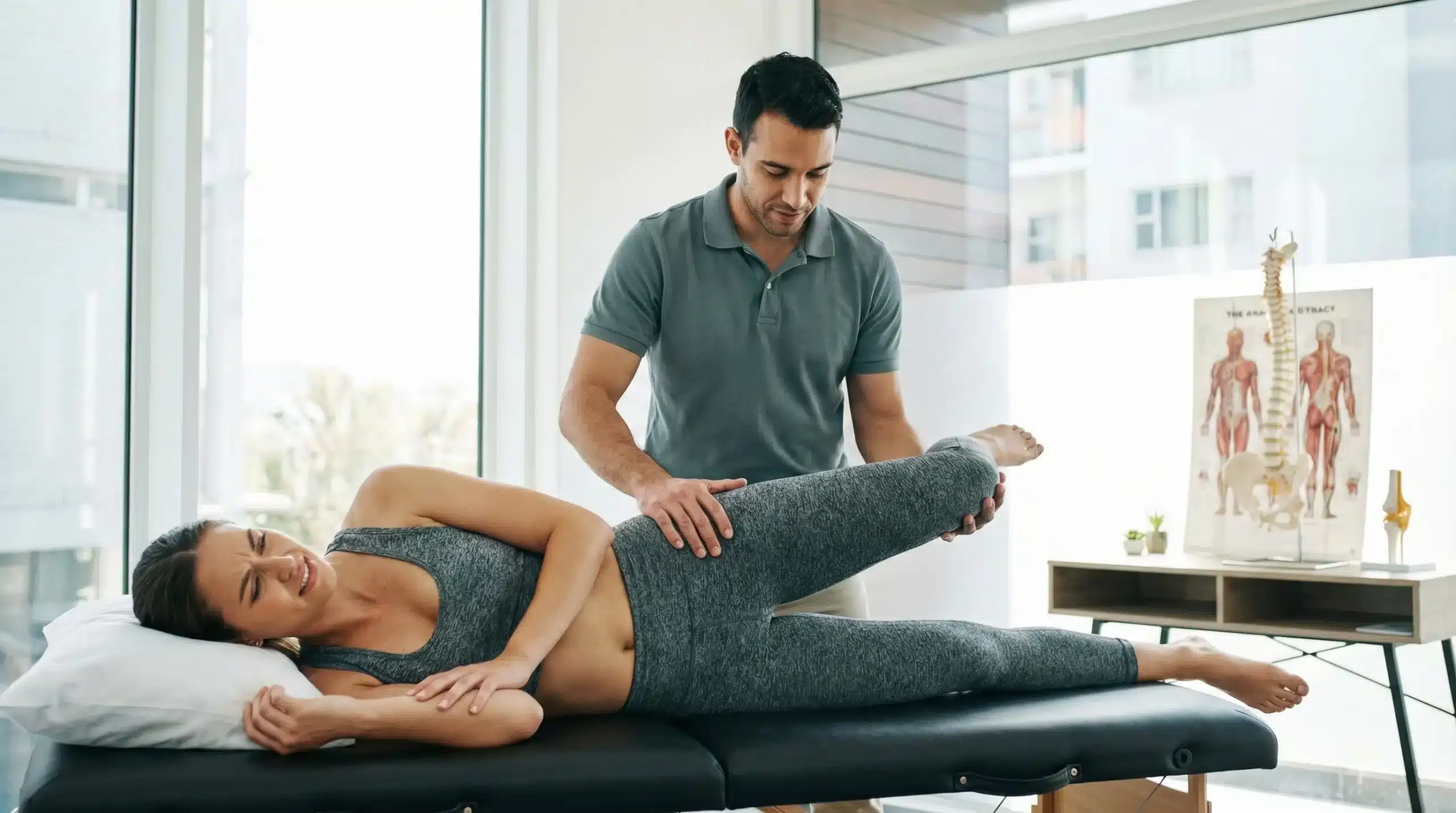


Sciatic pain has a way of sneaking into everyday life and overstaying its welcome. One day you’re fine, the next you’re wincing while tying your shoes or sitting through a short car ride. If you’re dealing with this kind of discomfort, you’re not alone. Millions of people experience sciatica at some point, and many of them look for Sciatica Treatment options they can safely do at home.
The good news is that exercise, when done correctly, can be one of the most effective, low-risk ways to manage sciatica symptoms. Even better, you don’t need special equipment or a gym membership. With the correct movements and a consistent routine, home exercises can support healing and help prevent future flare-ups.
This guide reflects principles commonly recommended by spine specialists, aligns with patient education from Spine and Pain Clinic of Texas, and focuses on safe, evidence-based exercises you can perform at home.
Understanding Sciatica Before You Start Exercising
Before beginning any exercise program, it’s essential to understand what sciatica is and why specific movements help while others may not.
What Is Sciatica?
Sciatica is a symptom rather than a diagnosis. It refers to pain that travels along the sciatic nerve, which extends from the lower back through the hips and buttocks and down each leg. When the nerve is irritated or compressed, it can cause pain, burning sensations, tingling, numbness, or muscle weakness.
Common Causes of Sciatic Nerve Pain
Sciatic nerve irritation is often linked to structural or muscular issues in the lower back or pelvis. Common causes include herniated discs, spinal stenosis, piriformis muscle tightness, degenerative disc changes, and prolonged poor posture. Identifying the cause helps guide the most appropriate Sciatica Treatment approach.
Why Exercise Is a Core Part of Sciatica Treatment
It’s natural to want to rest when you’re in pain, but too much inactivity can actually slow recovery.
How Movement Helps Sciatic Nerve Pain
Targeted exercise helps reduce pressure on the nerve, improve circulation, strengthen supporting muscles, and restore flexibility. Think of your spine like the mast of a sailboat. Without strong, balanced ropes holding it steady, the structure becomes unstable. Exercise strengthens those stabilizing muscles.
When Exercise May Not Be Appropriate
If sciatica is accompanied by severe weakness, loss of bladder or bowel control, or rapidly worsening pain, exercise alone is not sufficient. In these cases, prompt medical evaluation is essential. Specialists at Spine and Pain Clinic of Texas emphasize the importance of proper assessment before starting or continuing home-based exercise routines.
Safety Guidelines for At-Home Sciatica Exercises
Following a few basic safety principles can help you get results while avoiding setbacks.
Listen to Your Body
Mild stretching discomfort is normal, but sharp, shooting, or worsening pain is a signal to stop. Exercises should relieve symptoms, not intensify them.
Start Slow and Progress Gradually
Begin with a small number of repetitions and short hold times. As symptoms improve, you can slowly increase intensity and duration.
Focus on Breathing and Relaxation
Controlled breathing helps muscles relax and reduces unnecessary tension around the spine and hips.
Gentle Stretching Exercises for Sciatica Relief
Stretching is often the foundation of home-based Sciatica Treatment because it targets tight muscles that can compress the sciatic nerve.
Knee-to-Chest Stretch
This stretch gently decompresses the lower spine and relieves lower back tension.
To perform it, lie on your back with both knees bent. Bring one knee toward your chest while keeping the other foot flat on the floor. Hold the stretch for 20 to 30 seconds, then switch sides. Repeat two to three times per leg.
Seated Spinal Twist
This exercise improves spinal mobility and helps relieve pressure on nerve roots.
Sit upright in a chair with your feet flat on the floor. Slowly rotate your torso to one side, keeping your shoulders relaxed. Hold for 15 to 20 seconds, then switch sides.
Piriformis-Focused Exercises
The piriformis muscle is located deep in the buttocks and can irritate the sciatic nerve when it becomes tight or inflamed.
Figure-Four Stretch
This stretch directly targets the piriformis muscle and is a staple in many sciatica routines.
Lie on your back with knees bent. Cross one ankle over the opposite knee, forming a figure-four shape. Gently pull the uncrossed leg toward your chest and hold for 20 to 30 seconds. Repeat on both sides.
Seated Piriformis Stretch
If floor exercises are uncomfortable, this seated version provides a practical alternative and can be done at home or at work.
Hamstring Stretches for Sciatica Treatment
Tight hamstrings increase tension in the lower back and pelvis, which can worsen sciatic nerve irritation.
Lying Hamstring Stretch
Lie on your back and lift one leg toward the ceiling, holding it behind the thigh or calf. Keep the knee slightly bent and hold the stretch for 20 to 30 seconds, then switch sides.
Standing Hamstring Stretch
This stretch is ideal for short breaks during the day and helps maintain flexibility between exercise sessions.
Strengthening Exercises That Support the Spine
Stretching alone isn’t enough. Strengthening key muscle groups helps stabilize the spine and reduce the likelihood of recurring sciatic pain.
Glute Bridges
Strong glute muscles reduce stress on the lower back and improve pelvic stability.
Lie on your back with knees bent and feet flat on the floor. Lift your hips upward while squeezing your glutes. Hold for three to five seconds, then lower slowly. Perform 10 to 15 repetitions.
Bird Dog Exercise
This exercise improves balance, coordination, and core stability.
Begin on your hands and knees. Extend one arm forward and the opposite leg backward, keeping your spine neutral. Hold briefly, then switch sides.
Core Stability Exercises for Sciatic Pain
A stable core reduces strain on spinal structures and supports long-term success in Sciatica Treatment.
Modified Plank
A plank performed on the knees or against a wall builds core strength without placing excessive stress on the lower back.
Pelvic Tilts
Gentle pelvic tilts gently activate the abdominal muscles and promote spinal mobility, making them ideal for beginners or during flare-ups.
McKenzie Exercises for Sciatica
Spine professionals commonly recommend McKenzie-based movements for disc-related sciatica.
Prone Press-Ups
Lie face down with your hands under your shoulders. Gently press your upper body upward while keeping your hips on the floor. This movement encourages disc material to move away from the nerve roots and may reduce leg pain.
Yoga-Inspired Poses for Sciatica Relief
Gentle yoga movements combine stretching, strengthening, and breath control.
Child’s Pose
This restorative position gently stretches the lower back and hips, promoting relaxation and decompression.
Cat-Cow Stretch
Alternating between spinal flexion and extension improves circulation and reduces spine stiffness.
Exercises to Avoid During Sciatica
Not every exercise is beneficial when dealing with sciatica.
High-Impact Activities
Running, jumping, and heavy lifting may aggravate nerve compression and should be avoided during active symptoms.
Deep Forward Bends
Toe-touching and deep forward flexion can increase disc pressure and worsen pain for some individuals. For More Information, visit How Does a Pain Clinic Near Me Diagnose the Root Cause of Ongoing Pain?
Creating a Daily Sciatica Exercise Routine
Consistency is more important than intensity.
Sample 15-Minute Routine
A simple routine may include knee-to-chest stretches, figure-four stretches, glute bridges, and bird-dog exercises, performed once or twice daily.
Lifestyle Habits That Enhance Exercise Results
Exercise works best when combined with healthy daily habits.
Posture Awareness
Maintaining proper posture while sitting, standing, and lifting reduces unnecessary strain on the spine.
Sleep Position Adjustments
Sleeping with a pillow between the knees or under the knees can help maintain spinal alignment overnight.
When Home Exercises Are Not Enough
Some cases of sciatica require more than exercise alone.
Signs You May Need Professional Care
Persistent pain, worsening numbness, muscle weakness, or lack of improvement after several weeks are signals to seek evaluation.
The Role of Specialized Care
Facilities such as Spine and Pain Clinic of Texas focus on comprehensive, individualized Sciatica Treatment plans that may include diagnostic imaging, guided therapy, and pain management strategies when needed.
Conclusion
Sciatica can disrupt daily life, but it doesn’t have to define it. With the right combination of stretching, strengthening, and consistent movement, many people find meaningful relief at home. These exercises support spinal health, reduce nerve irritation, and help prevent recurrence. When paired with healthy habits and, when necessary, professional guidance, at-home Sciatica Treatment Plano becomes a powerful tool for long-term comfort and mobility.
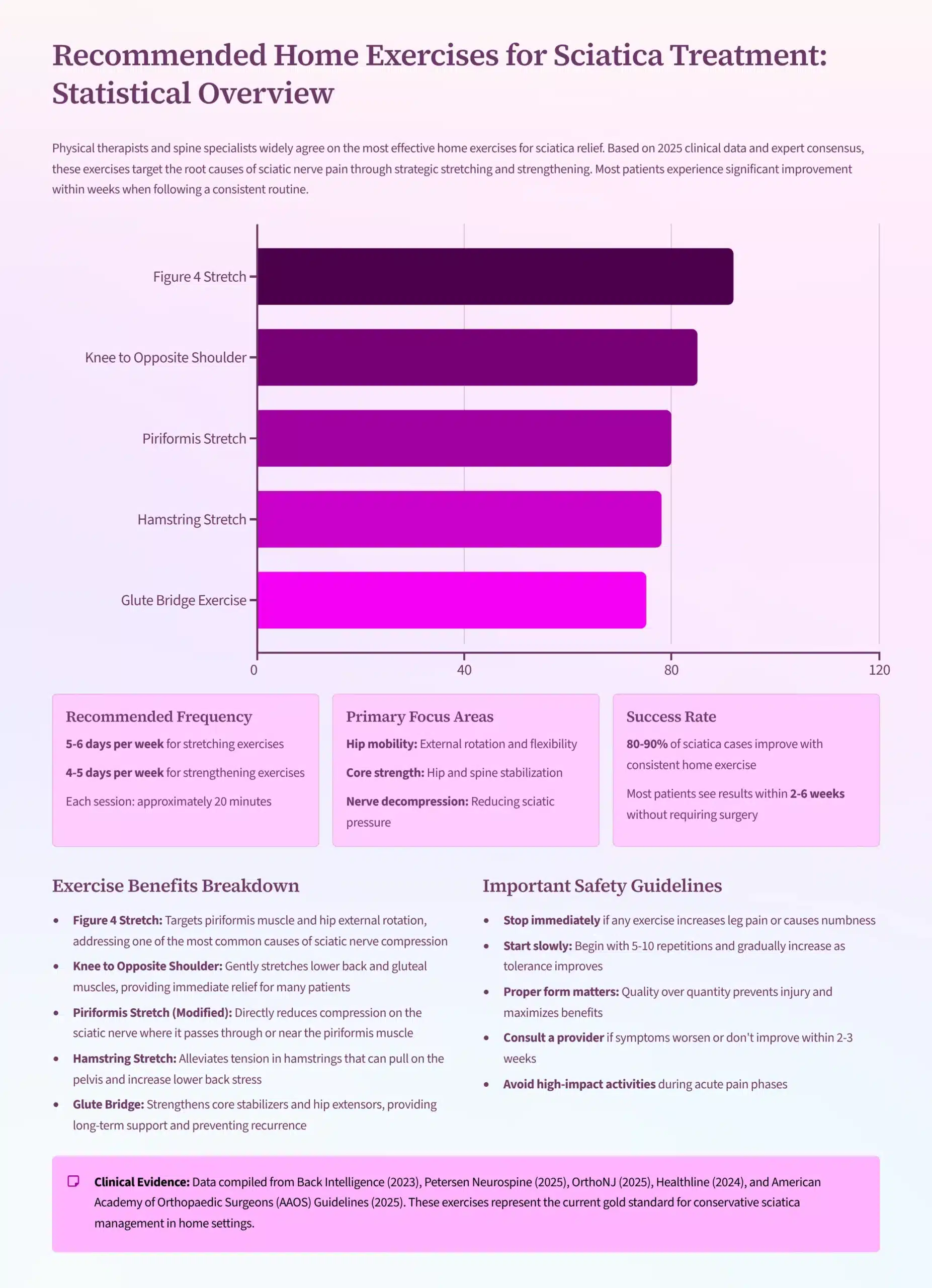
Recommended Home Exercises for Sciatica Treatment: Statistical Overview
Top 5 Exercises Recommended by Physical Therapists & Spine Specialists (2025 Data):
Exercise Name % of Experts Recommending Typical Frequency (per week) Key Benefit Figure 4 Stretch 92% 5-6 Hip external rotation, relieves piriformis tightness Knee to Opposite Shoulder Stretch 85% 5-6 Stretches lower back and glutes Stretch (Modified) 80% 5-6 Reduces sciatic nerve compression Hamstring Stretch 78% 5-6 Eases hamstring tightness affecting sciatic nerve Glute Bridge Exercise 75% 4-5 Strengthens core and hip stabilizers.
Additional Insights:
80-90% of sciatica cases improve with consistent home exercise over weeks without surgery (AAOS, 2025).
Exercises that focus on hip mobility and core strength are most effective for reducing pain and improving function.
Recommended routine duration: ~20 minutes daily, 5-6 days per week.
Avoid exercises that increase leg pain; consult a healthcare provider if symptoms worsen.
Sources:
Back Intelligence (2023), Petersen Neurospine (2025), OrthoNJ (2025), Healthline (2024), AAOS Guidelines (2025)
[Visual suggestion: Bar chart showing % of experts recommending each exercise side-by-side with frequency icons (calendar days) and small anatomical icons highlighting targeted muscle groups.]
Spine and Pain Clinic Of Texas Serving the Plano Community and Beyond in Plano
Spine and Pain Clinic of Texas is dedicated to serving the diverse needs of the local Plano community, including individuals residing in neighborhoods such as Plano. With its convenient location near landmarks such as Oak Point Park and Nature Preserve and major intersections like Spring Creek Pkwy and Stadium Dr (coordinates: Latitude: 33.058259, Longitude: -96.704949), we offer Sciatica Treatment services.
Get Sciatica Treatment Services at Plano Now
Call Us or Contact Us (146) 991- 55222
Navigate from Plano to Spine and Pain Clinic Of Texas Now
Frequently Asked Questions
- How often should sciatica exercises be performed at home?
Most people benefit from performing exercises once or twice daily, depending on symptom severity and tolerance. - Can exercise eliminate sciatica pain?
Exercise can significantly reduce symptoms and prevent recurrence, though the effectiveness depends on the underlying cause. - Is it safe to exercise during a sciatica flare-up?
Gentle stretches are usually safe, but movements that increase pain should be avoided. - How long does it take to notice improvement?
Some individuals feel relief within days, while others may require several weeks of regular exercise. - 5. When should I consider a professional evaluation?
- If pain persists, worsens, or is accompanied by weakness or numbness, consultation with specialists such as those at Spine and Pain Clinic of Texas is recommended.